
Why Every Woman You Know is Running Her Own Clinical Trial
For years, women have been running the world’s largest decentralized research project—one symptom, lab result and late-night Google search at a time.
Ask your friends what she’s tracked, tested or troubleshooted on her own body this year—and see how long the list gets. Cycle apps, continuous glucose monitoring, hormone panels, symptom tracking, TikTok scrolling, Reddit deep-diving, Dr. ChatGPT-ing.
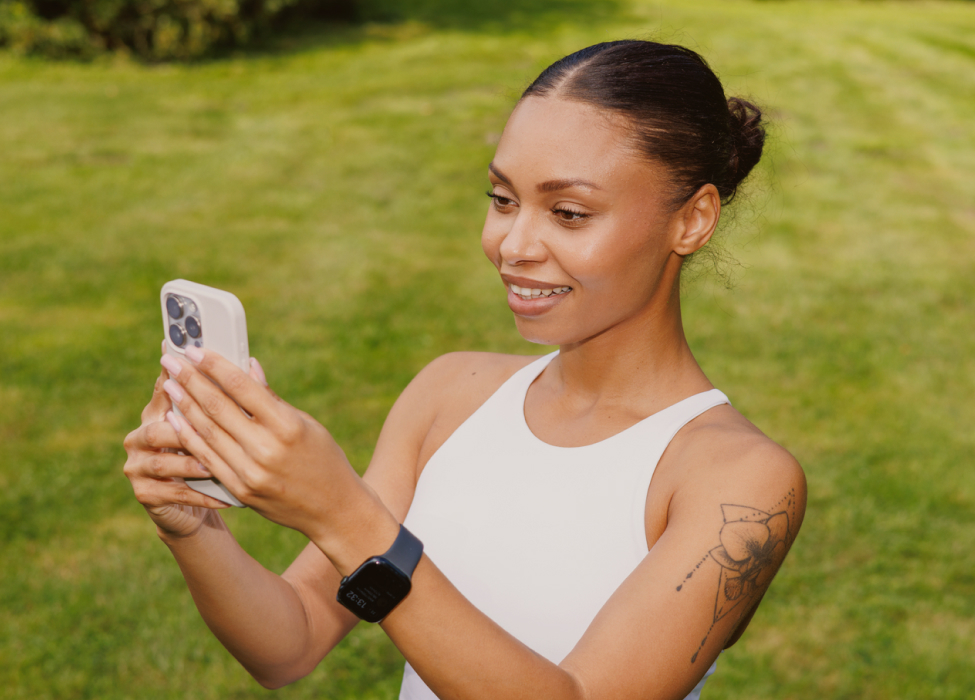
Women are taking their health into their own hands. And it’s about time.
We didn’t wake up one morning wanting to become experts in hormones, autoimmune disease, fertility and metabolic disorders. This is what happens when we stop believing the system is going to figure it out for us. We’ve turned to ourselves for the answers. Even my own mother (a stubborn boomer!) put her recent medical results in ChatGPT because her doctor can’t speak to her for weeks.
We are all relentlessly seeking answers within a system that wasn’t built for us.
How did we get here?
These dynamics are the result of decades of eroded trust, limited access and institutions that haven’t kept pace.
Trust Issues.
A recent national survey found that 72% of Americans believe the healthcare system needs significant reform. 75% think providers and insurers prioritize profit over patient care.
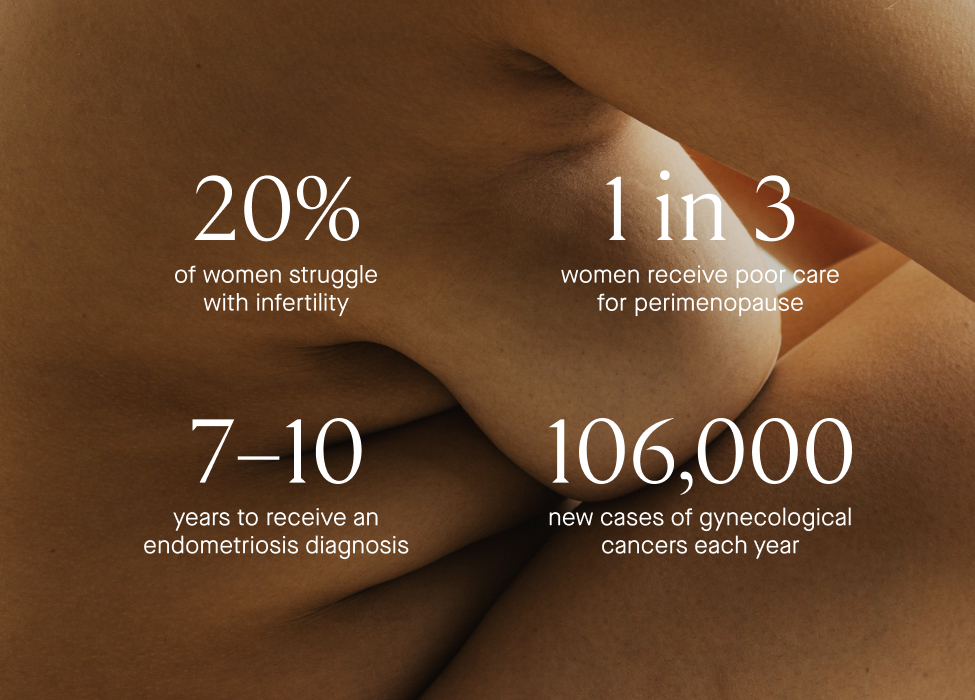
Women have been historically underresearched. Female biology wasn’t a required part of clinical research until the early 1990s. Continuing today, conditions like endometriosis and perimenopause still receive a fraction of the research funding given to diseases with comparable impact.
In a 2025 Survey, an overwhelming 93% of women report feeling dismissed when seeking medical help, underscoring a major issue in healthcare that has led to worsened health outcomes, delayed diagnoses and a loss of trust in the healthcare system.
Access & Equity Problems.
Since the overturning of Roe v. Wade, women’s healthcare has grown even more fragmented. Maternity care deserts are spreading: 35% of U.S. counties now have zero obstetric clinicians or birthing centers.
Specialists for complex gynecological concerns, menopause, infertility and hormonal conditions are even more exclusive—concentrated in cities and often reachable only with private insurance or out-of-pocket spending.
Telehealth and mail-order prescriptions closed some of that gap over the past five years, but they have just as quickly become the target of legal challenges in states where women need it the most.
Bigger than Healthcare.
Oversight has been eroding across the board—environmental protections, food and drug regulation, the agencies meant to protect public health broadly. Many of us increasingly feel like we’re navigating systems guided by politics rather than our health needs.
None of these issues are new, but they are becoming more severe—and our willingness to accept it is shifting.

Good news. Change is happening—and we are here for it.
Foundational Funding.
In August 2025, the Gates Foundation committed $2.5 billion through 2030 to women’s health research and development—the largest single investment it has ever made in the category, aimed at conditions that have been chronically underfunded for decades. Yet even the foundation called it “a drop in the bucket,” and said the real point was to get other funders to follow. And they are starting to.
This doesn’t close a multi-decade funding gap—but for the first time, the money is starting to move in the right direction.
Women’s Data Put Into Practice.
“I’m going to change the F-ing system,” says the head coach of the U.S. Women’s National Soccer Team.
Much of modern physiology and algorithms behind recovery scores, readiness metrics and training recommendations rely on decades of research conducted primarily in men. This is starting to shift too. USWNT Coach Emma Hayes built training and recovery plans around female soccer players’ menstrual cycles—tracking phase-by-phase data to manage injury risk and performance, instead of treating the cycle as something to push through or coach around.
FIFA is funding researchers at Kingston University specifically to investigate the link between the menstrual cycle and the elevated rate of ACL injuries in women’s soccer—the kind of study that didn’t get funded when the men’s game was the default model for understanding athletic bodies.
Built for Us, Not Reverse-Engineered.
The same shift is happening in the next wave of women’s health products and services. Built around female biology from the start, not adapted to it years later.
Our branding client Xella Health is building exactly this: a precision health platform combining multi-omic testing, AI-powered analysis and clinician-backed care based on female data and research.
“For too long, women’s health has felt fragmented and reactive,” says Kelly Lacob, Co-Founder & CEO of Xella Health. “Xella is building the infrastructure to get to the root cause of conditions that have disproportionately affected women, many of whom have lived with an unacceptably poor standard of care.”

What This Means for Brands & Marketers
Women’s health has entered a new era—and brands should pay attention.
What resonates has shifted. Women aren’t looking for another brand to simply educate us about problems we’ve been living with for years. We’re looking for partners that help us make sense of what we know—and turn that knowledge into change that sustains.
At Bartlett Brands, we partner with pioneering leaders like Daré Bioscience, Xella Health, Malama and Ovii to define the next era of women’s health. At the intersection of culture, consumer behavior, science and strategy, we are building brands that earn trust in categories where trust has been broken.
Because the future of women’s health isn’t just being researched, funded or engineered. It’s being branded.